Did you know…?
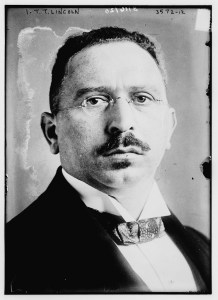
This is Ignatius Timothy Trebitsch-Lincoln.
Member of Parliament for Darlington. Buddhist abbot. Self-proclaimed Dalai Lama. Convicted con artist. Infamous spy. Nazi collaborator. Continue reading Ignatius: Father of John Lincoln
This is Ignatius Timothy Trebitsch-Lincoln.
Member of Parliament for Darlington. Buddhist abbot. Self-proclaimed Dalai Lama. Convicted con artist. Infamous spy. Nazi collaborator. Continue reading Ignatius: Father of John Lincoln
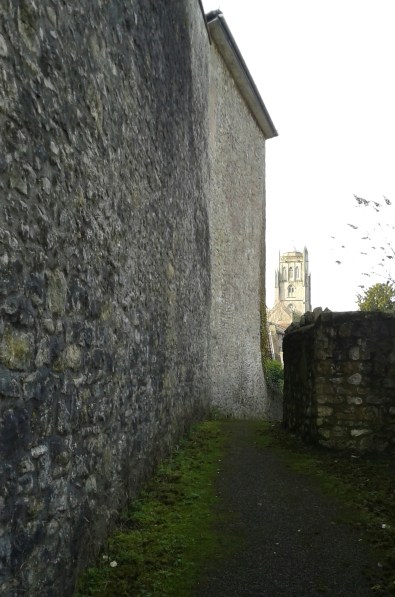
Bombardier John Lincoln was the eldest son of Ignatius Timothy Trebitsch-Lincoln. Born Natzl, he changed his name in order to distance himself from his father.
John has the rather dubious claim of being subject to the last civil execution to be carried out at Shepton Mallet.
On the evening of Wednesday 23 December 1925, John and another Royal Artillery Bombardier, Ian Stewart had been out drinking. They travelled to the Trowbridge home of Edward Richards, with the intention of robbing him. They both carried weapons because they believed that Edward kept a pistol. They entered Edward’s home and soon found the pistol.
When Edward arrived home from work he realised that someone had broken in. He fired a pistol into the kitchen – not with the intention to harm but in defence as he was in possession of a large amount of money belonging to the Brewery. John fired back. He shot Edward and then attacked him with an empty beer bottle.
Edward died in the early hours of Christmas Eve, soon after reaching hospital.
John and Ian were arrested on Christmas Day and were tried for murder on 19 January 1926. Ian was acquitted of murder but was sentenced to 14 years for burglary. John was found guilty of murder and sentenced to death.
On 1 March 1926 John was visited at Shepton Mallet Prison by his fiancée, Miss Lily Brown of Trowbridge, Lily’s brother, John’s brother Lincoln and his mother, Gretchen. His estranged father wasn’t present – he was still en route from Sri Lanka.
On the morning of 2 March 1926 John Lincoln had breakfast, played (and won) a final game of crib and then, at 8am, went to the gallows.He remains buried in plot seven inside the walls on the west side of the prison.
Did you know…?
Edward Charles Ingham Richards lived in Trowbridge with his wife and child.
He was a traveller, employed by Usher’s Wiltshire Brewery.
His life came to a sudden end in the early hours of Christmas Eve 1925 as a result of the drunken actions of Bombardier John Lincoln and his accomplice Ronald Stewart. He was aged 25 years.
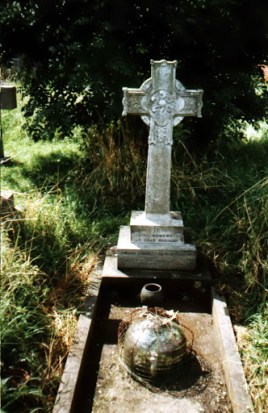
Edward was respectfully laid to rest in North Bradley churchyard, Wiltshire.
John Lincoln went to the gallows and was buried in unconsecrated ground in an unmarked grave within the walls of Shepton Mallet Prison where it remains to this day.
[Photo from Disney, 1992]
Published on 20/03/16 @ Creating a Vision and Future for Shepton Mallet Prison

Last week one of my son’s classmates was crowned ‘Time Lord’ (or more correctly ‘Time Lady’). The newly created award was in recognition of her mastering the art of telling the time.
Being able to tell the time is something I have taken for granted for as long as I can remember. I have no recollection of how I was taught this skill. It did’t even occur to me just how much there is to telling the time until trying to explain the whole concept.
This isn’t an actual conversation, but you get the gist!
Okay, the numbers on a clock go from 1 to 12 (assuming your clock has numbers – my watch doesn’t!). These are the hours. The little hand has to go around the clock twice each day. There is a 7 o’clock in the morning and a 7 o’clock in the evening, for example.
So, when the little hand points to the 1 it is 1 o’clock. When it points to the 2 it is 2 o’clock. If it is somewhere between the 1 and 2 then it is somewhere between 1 and 2 o’clock. To work out how far between the two, you need to look at the big hand …
Okay, so you know I said the 12 numbers were the hours? Well, what I should have said is that this is when the little hand is pointing to them. When the big hand points to the numbers they don’t represent hours any more, they are minutes…but the 1 actually means 5 and the 2 means 10. Let me explain…
The big hand goes around the clock face once every hour. Each of the numbers on the clock represents 5 minutes. So, the 1 now equals 5 minutes past; the 2 equals 10 past, and so on. Now unless your clock helpfully shows the minutes, then you either have to remember this or learn your 5 times table to work it out!
So the 3 is 15 past? Err, well yes – but no! We actually say ‘quarter past’. Oh, and the 6 isn’t 30 past we say ‘half past’.
So the number 7 is ’40’? Again, it is and it isn’t! On a digital clock it would show ’40’ but on a clock with hands, once we get beyond 6 we don’t talk about ‘minutes past’ any more. We talk about ‘minutes to’ the next hour. Now you need to count anticlockwise. Anticlockwise…? Yes – the opposite way to the way the clock ticks! So, 11 equals ‘5 to’, 10 equals ’10 to’ and 9 equals – yes, you guessed it ‘quarter to’!
Great isn’t it!
So there really is more to telling the time than meets the eye! It just goes to show how important it is to break things down into manageable chunks. Learn one element at a time and then move on to the next.
I may not have a ‘Time Lord’ yet…but it will only be a matter of time.
“It’s a boy!”
This is the fantastic news I received from a friend this week. It took me back to over 7 years ago when the midwife handled me my own beautiful bundle. I couldn’t have been happier.
When such news usually fills people with joy, how is it that for so many people the words “he’s a boy” can make them feel so angry and frustrated once their child starts school? It seems expected that boys will not develop as quickly as girls and will fall behind with reading and writing.
It is true that some girls will sit quietly reading and writing pages of beautiful text and some boys will not sit still long enough to put pencil to paper but such sweeping generalisations really do not help anyone. Do a search on “boys and reading” and a whole host of articles will pop up about how to encourage boys to read.

