End of the Road

20150714_190405

The end of the road? Surely with the planning application for the prison’s redevelopment being refused by the Mendip Planning Board on Wednesday evening this should actually be the start of a new chapter? Not so – for me at least.

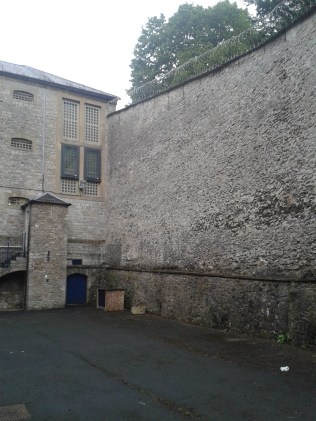
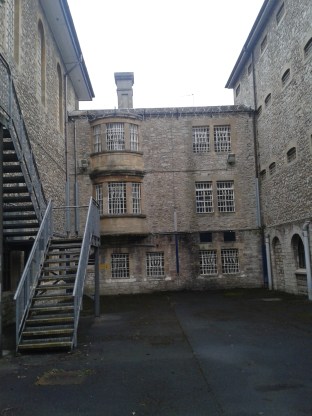
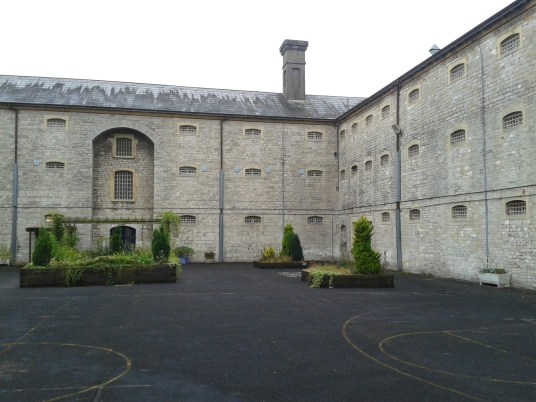
My ‘journey’ with Shepton Mallet Prison started a year ago when this picture was taken at the first consultation event I attended. I have learnt so much about the prison (and myself) since then.

What did I learn following the Planning Board meeting on Wednesday (which incidentally I did not attend)? I learnt that many of those who spoke against the housing development and resulted in its refusal don’t actually object to the development at all. The Listed Building application after all was approved. Apparently, the main problem is parking and safety on the local road network.

I don’t actually disagree with the latter. The parking is likely to prove to be inadequate and the narrow local roads have limited pavements. It does indeed feel unsafe to walk along them with a young child.

I don’t, however, think the problems with the development will be solved by finding some extra parking and maybe introducing traffic calming.

This is a truly personal opinion and I totally respect the fact that it is not one others will share – I do actually object to the development.

The concerns about parking and highways are valid because (in my opinion) the site is overdeveloped and the plans do not sufficiently take into account the context in which they are brought forward.

Shepton Mallet is an historic market town with no mainline train station and limited public transport. Many people have to commute many miles to their places of employment. Many people have no choice but to use a car. Some people are lucky enough to be able to walk to work (or can afford not to work). If all of those people are lucky enough to afford a new flat in the prison then I wish them, and the redevelopment, well. If not, then there will be a problem that will persist long in to the future. Unfortunately I do not see the public transport situation improving any time soon.

The development proposals require the demolition of bat roosts, with little thought given to how to accommodate them in the future site proposals. It requires the site to be lit internally and externally – again with little thought to the bat population or surrounding neighbours. Perhaps it will be a good thing if the area feels too dark and unsafe at present – or perhaps people will miss the fact that the area is currently not lit around the clock. I don’t know as I don’t actually live in this part of town. That’s for the prison’s neighbours to decide.

The flats need to be built to cover the costs of the redevelopment. There is no room for ‘affordable housing’. Perhaps the development is so costly because there are so many costly interventions built in to the plans? It cannot be cheap to relocate the bodies of executed prisoners, demolish so many buildings and internal features and build so many new elements. Perhaps housing is not the right answer then? Or perhaps it is and these interventions, the level of redevelopment and the final cost of housing is the price to pay?

The developers make a living from redeveloping historic buildings. Many people will, however, attest to the fact that historic buildings and profit don’t often fit together. It often takes the intervention of trusts, charities and grants to plug the shortfall in cash. Decisions are taken to do this for ‘the greater good’ – there is a reason for doing so beyond profit.

I personally feel that Shepton  Mallet Prison has something greater to offer. I believe it opens up a world of opportunities to learn about how we have progressed as a society over 400 years. To learn about crime, punishment and rehabilitation.

400 years ago I would probably have been imprisoned (or worse) for being a woman with strong opinions. I would certainly have been imprisoned for not attending church on a Sunday.  Sometimes you need to have reminders of where we have come from – particularly if it means we don’t go back there.

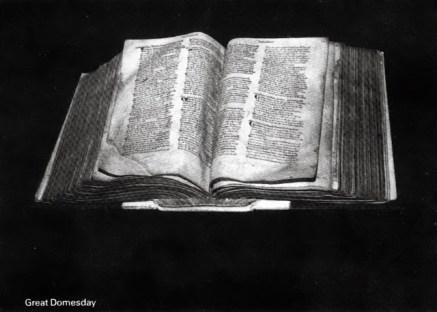
Shepton Mallet Prison has a very grim past. Many people believe this is best forgotten – or left written in a book. The developers have certainly done much in their proposals to help cover things up – open up a new entrance in the walls, build mews in front of them, remove the bodies, demolish the execution chamber, introduce lighting and new landscape planting, have an interpretation area that’s open by appointment only. I totally understand that. Who would want to live in the prison as it is? It’s former inhabitants had no choice. Future paying customers certainly do.

I never expected the site to be completely redeveloped as a heritage site. I do after all live in the real world. I just always hoped that a better balance would be struck. That people would value the heritage of the site rather than simply look to preserve elements of bricks and mortar.

So to conclude, this is the end of the road for me as it appears that it has been decided that housing is an acceptable use as long as the parking is sorted. The interpretation proposals are fine as long as there is a legal agreement to secure them and additional information is provided about what is proposed. The interventions to the Listed Building are already approved.

What more is there for me to say?


Learning from 400 years of History

Did you know…?

Where prisons have been converted to alternative uses they provide a valuable educational resource. For example, the Galleries of Justice Museum in Nottingham provides hands-on learning experiences, bringing the subjects of History and Citizenship to life. Continue reading Learning from 400 years of History

What is planned for the prison’s heritage?

20150714_192545

Did you know…?

Through publishing our ‘Did you know…?’ stories on this page we have been introducing you to just some of the prison’s fascinating stories and those of the people who worked and were detained there.

Now that the planning application has been submitted it is time to update you on what is happening to each of these elements:

– The Grade II* listed Treadwheel building is to be converted to 4 1-bedroom apartments, with the lower ground floor retained for storage use.

– The Grade II listed walls of the prison will have a new pedestrian opening inserted in the southwest corner of the site. The south and southwest prison walls will be largely obscured from internal view following the construction of two blocks of three storey mews providing 17 apartments with 31 under croft parking spaces. The mews will be higher than the 8m walls, when measured to the ridge of the roof and some will protrude above the walls.

– The Grade II* listed prison buildings will mostly be converted to apartments, with the former visitors’ centre to be used as a café/community/interpretation space along with the retention of 7 cells within B Wing for historic interpretation use.

– The Grade II listed Gatehouse will be open to provide a new pedestrian access to the site.

– The block containing the consecrated prison chapel, the Church of Saint Andrew, will be demolished. It will be replaced by a new five storey apartment block with 23 apartments and 9 parking spaces.

– The workshop building will be converted to 28 apartments and 76 parking spaces. Two floors will be added to the top of the building.

– The execution room built by the US Armed Forces will be demolished.

– A culvert carries a watercourse under the prison into the River Sheppey. C&C propose to divert this.

– You told us about some of the ‘cool’ bits like the carved markings and tallies in the wall in the original holding cells and bullet marks in the prison walls. We understand that these will all be lost/covered up during the redevelopment process.

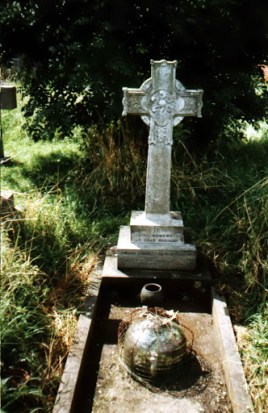
– The bodies of prisoners executed as recently as the 1920s lie within unmarked graves within the prison walls. We believe these bodies will need to be exhumed to make way for the mews apartments.

So what do you think?

Do City & Country’s plans effectively safeguard the heritage of Shepton Prison for the future? Which features to be lost do you value most and think should be retained?

Do let us know but also please let MDC know by responding to the planning application linked here. Time is running out on this planning consultation period, so do be quick.

Published on 10/04/16 @ Creating a Vision and Future for Shepton Mallet Prison

Bombardier John Lincoln

20160214_110231-1

Did you know…?

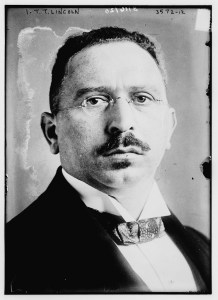
Bombardier John Lincoln was the eldest son of Ignatius Timothy Trebitsch-Lincoln. Born Natzl, he changed his name in order to distance himself from his father.

John has the rather dubious claim of being subject to the last civil execution to be carried out at Shepton Mallet.

On the evening of Wednesday 23 December 1925, John and another Royal Artillery Bombardier, Ian Stewart had been out drinking. They travelled to the Trowbridge home of Edward Richards, with the intention of robbing him. They both carried weapons because they believed that Edward kept a pistol. They entered Edward’s home and soon found the pistol.

When Edward arrived home from work he realised that someone had broken in. He fired a pistol into the kitchen – not with the intention to harm but in defence as he was in possession of a large amount of money belonging to the Brewery. John fired back. He shot Edward and then attacked him with an empty beer bottle.

Edward died in the early hours of Christmas Eve, soon after reaching hospital.

John and Ian were arrested on Christmas Day and were tried for murder on 19 January 1926. Ian was acquitted of murder but was sentenced to 14 years for burglary. John was found guilty of murder and sentenced to death.

On 1 March 1926 John was visited at Shepton Mallet Prison by his fiancée, Miss Lily Brown of Trowbridge, Lily’s brother, John’s brother Lincoln and his mother, Gretchen. His estranged father wasn’t present – he was still en route from Sri Lanka.

On the morning of 2 March 1926 John Lincoln had breakfast, played (and won) a final game of crib and then, at 8am, went to the gallows.He remains buried in plot seven inside the walls on the west side of the prison.

Published on 20/03/16 @ Creating a Vision and Future for Shepton Mallet Prison
References: Disney, 1992.

A Life Lost

Edward Charles Ingram Richards

Did you know…?

Edward Charles Ingham Richards lived in Trowbridge with his wife and child.

He was a traveller, employed by Usher’s Wiltshire Brewery.

His life came to a sudden end in the early hours of Christmas Eve 1925 as a result of the drunken actions of Bombardier John Lincoln and his accomplice Ronald Stewart. He was aged 25 years.

Edward was respectfully laid to rest in North Bradley churchyard, Wiltshire.

John Lincoln went to the gallows and was buried in unconsecrated ground in an unmarked grave within the walls of Shepton Mallet Prison where it remains to this day.

[Photo from Disney, 1992]

Published on 20/03/16 @ Creating a Vision and Future for Shepton Mallet Prison

A Matter of Time…

IMG_4482

Last week one of my son’s classmates was crowned ‘Time Lord’ (or more correctly ‘Time Lady’). The newly created award was in recognition of her mastering the art of telling the time.

Being able to tell the time is something I have taken for granted for as long as I can remember. I have no recollection of how I was taught this skill. It did’t even occur to me just how much there is to telling the time until trying to explain the whole concept.

This isn’t an actual conversation, but you get the gist!

Okay, the numbers on a clock go from 1 to 12 (assuming your clock has numbers – my watch doesn’t!).  These are the hours. The little hand has to go around the clock twice each day. There is a 7 o’clock  in the morning and a 7 o’clock in the evening, for example.

So, when the little hand points to the 1 it is 1 o’clock. When it points to the 2 it is 2 o’clock. If it is somewhere between the 1 and 2 then it is somewhere between 1 and 2 o’clock. To work out how far between the two, you need to look at the big hand …

Okay, so you know I said the 12 numbers were the hours? Well, what I should have said is that this is when the little hand is pointing to them. When the big hand points to the numbers they don’t represent hours any more, they are minutes…but the 1 actually means 5 and the 2 means 10. Let me explain…

The big hand goes around the clock face once every hour. Each of the numbers on the clock represents 5 minutes. So, the 1 now equals 5 minutes past; the 2 equals 10 past, and so on. Now unless your clock helpfully shows the minutes, then you either have to remember this or learn your 5 times table to work it out!

So the 3 is 15 past? Err, well yes – but no! We actually say ‘quarter past’. Oh, and the 6 isn’t 30 past we say ‘half past’.

So the number 7 is ’40’?  Again, it is and it isn’t! On a digital clock it would show ’40’ but on a clock with hands, once we get beyond 6 we don’t talk about ‘minutes past’ any more. We talk about ‘minutes to’ the next hour. Now you need to count anticlockwise. Anticlockwise…? Yes – the opposite way to the way the clock ticks! So, 11 equals ‘5 to’, 10 equals ’10 to’ and 9 equals – yes, you guessed it ‘quarter to’!

Great isn’t it!

So there really is more to telling the time than meets the eye! It just goes to show how important it is to break things down into manageable chunks. Learn one element at a time and then move on to the next.

I may not have a ‘Time Lord’ yet…but it will only be a matter of time.